Vermouth: history, origins and two interpretations based on Moscato
Vermouth: a story of wine, herbs and hospitality
There was a time when offering a small glass of Vermouth to someone visiting your home was customary. Especially in northern Italy, it was a way to welcome guests and get a conversation started.
But where does Vermouth come from?
Although aromatising wine with plants, resins and spices was already common in Ancient Greece and Rome, particularly for medicinal purposes, modern Vermouth dates back to 1786, when in Turin, liquorist Antonio Benedetto Carpano developed a recipe based on wine, herbs and spices. The name derives from the German word Wermut, meaning wormwood, one of the botanicals traditionally used in its preparation.
Vermouth in the Italian tradition
During the nineteenth and twentieth centuries, Vermouth spread rapidly, particularly in northern Italy. It was enjoyed in cafés and social gathering places, but also at home, where it was offered to guests. Historically made with Moscato wine, thanks to its distinctive aromatic profile, Vermouth gradually became less common in everyday home life, increasingly establishing itself as an ingredient in cocktail making.
Ca’ Lustra’s Moscato-based Vermouths
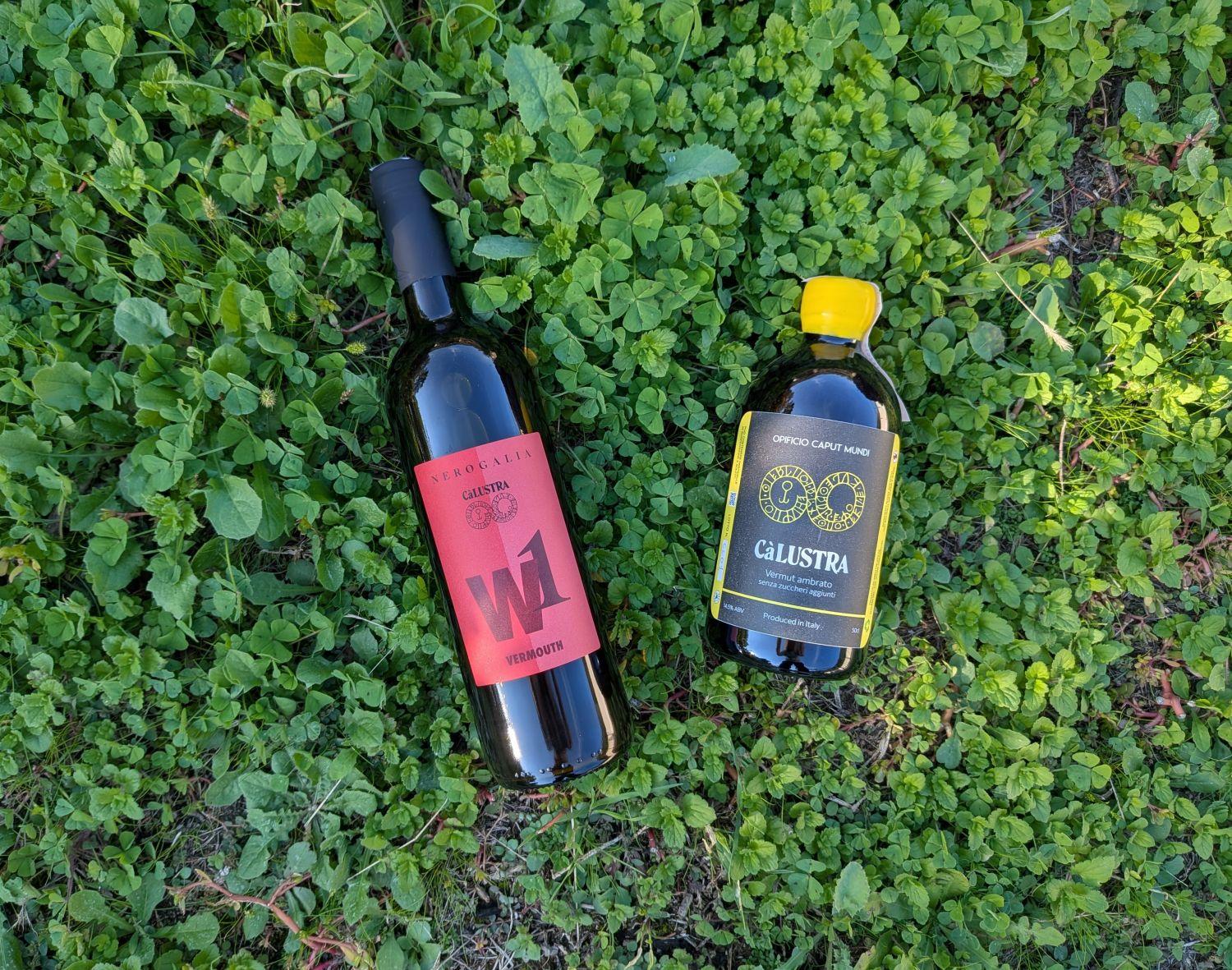
We wanted to explore this world too, starting with a raw ingredient we know well: Moscato. The Euganean Hills are renowned for their suitability for aromatic grape varieties, and given the versatility of Moscato, why not try making a Vermouth from the Euganean Hills? This led to two different interpretations: one to be enjoyed neat, allowing its complex aromas to shine, and the other designed for mixing into cocktails.
- W1 Vermouth
Our first experiment, which was immediately well received and is now almost sold out, can be enjoyed with an ice cube as an aperitif or neat at the end of a meal.
On the nose, candied citrus fruits unfold, from sweet to bitter orange, alongside dried flowers, chamomile and rose. Notes of honey and cane sugar follow, together with balsamic nuances, sweet spices such as cinnamon and nutmeg, and a touch of ginger. On the palate, citrus and spices return, with lively heat and a slight bitter edge. The finish recalls lime-blossom honey and eucalyptus. The overall impression is well balanced, fresh and dry.- Vermut Ca' Lustra
Ideal for mixing, it lends itself both to the creation of original cocktails and to a fresh take on the great classics, such as the Negroni and the Americano.
Its aromatic profile is refined and layered, with notes of gentian accompanied by delicate Moscato nuances. Bitter orange peel stands out, bringing freshness and character, while subtle minty notes intertwine with hints of rhubarb and dandelion. On the palate, it is dry, with a bitterness balanced by pleasant notes of peach and jasmine. A touch of salinity adds depth, while bitter orange peel returns prominently. A delicate hint of ginger rounds off the finish, adding lift and persistence.
All that’s left is to come and visit our winery and try our Vermouths!