Olivetani: the story behind the name
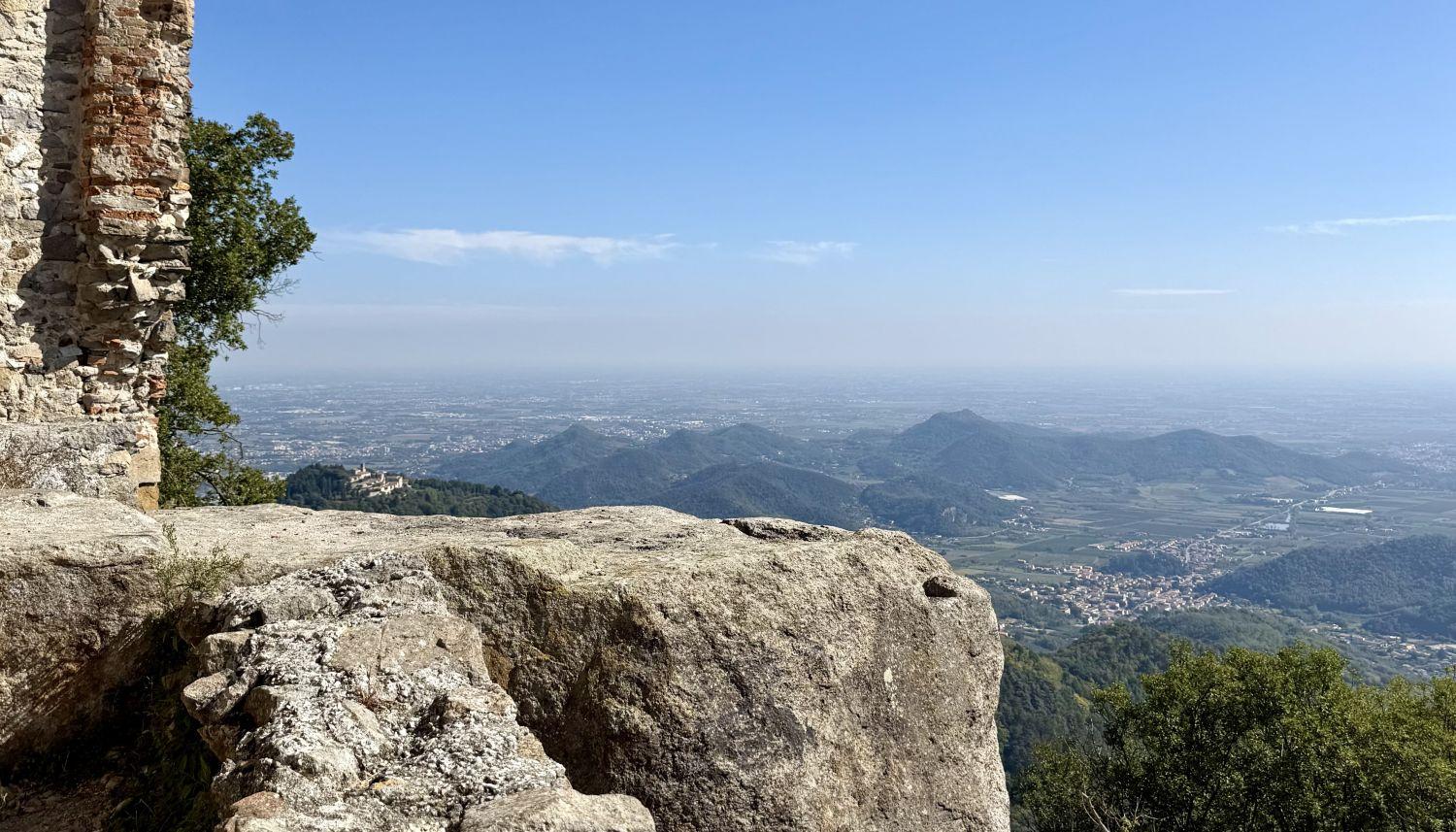
Olivetani is the name we chose for one of our traditional white wines. A name of our own invention, inspired by the ruins of the ancient Olivetani monastery on the summit of Mount Venda. From here, you can enjoy one of the finest views across the Euganean Hills, with our vineyards not far away. But who were the Olivetans, and how did they come to settle here?
FROM TUSCANY TO THE EUGANEAN HILLS
The history of the order began in Tuscany in the early 14th century. In 1313, the Sienese nobleman Bernardo Tolomei and a group of companions decided to leave city life behind and retreat to Accona, near Siena, to devote themselves to prayer and solitude. There they founded the monastery of Santa Maria di Monte Oliveto, from which the congregation takes its name. The name referred both to the olive trees growing in the area and to the Mount of Olives in Jerusalem, a place of symbolic significance in Christian tradition.
The monks followed the Rule of Saint Benedict, summed up in the expression "ora et labora": pray and work. Their days were marked by religious services, reading and meditation, as well as manual labour and the care of the land. This focus on agriculture was also characteristic of the monastic community on Mount Venda, where vineyards are documented as early as 1260.
A MONASTERY ON MOUNT VENDA
The Olivetans' history on Mount Venda was part of a much older monastic tradition. A religious settlement already existed there in the late 12th century and, from 1229, developed into a monastery with a church dedicated to Saint John the Baptist. The complex grew thanks in part to donations from noble families in the area. After a period of difficulty, in 1380 the community was entrusted to the Olivetans, who helped renovate and expand the monastery.
THE END OF THE MONASTERY
The Olivetans' history on Mount Venda came to an end in 1771. At the time, the Republic of Venice was pursuing a policy of reorganising religious institutions and reducing ecclesiastical estates. The Olivetani monastery was also dissolved: the monks were transferred elsewhere and its assets confiscated before being put up for auction. Ownership changed hands several times, while the land continued to be farmed. The monastic buildings, having lost their original purpose and being difficult to maintain because of their isolated location, were gradually abandoned, eventually falling into the ruins we see today.
It is this place, so close to our vineyards, that inspired the name Olivetani, chosen for our traditional white wine. Curious to try it?